Planning the Alternative PL Assignment
Alternate Professional Learining: Call to Action



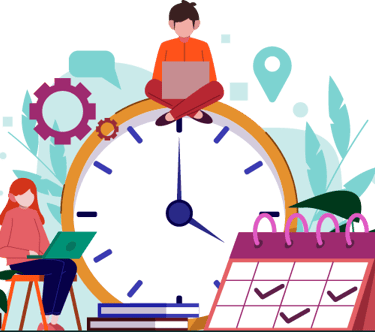
Building a Learning Community Where Teachers Grow Together
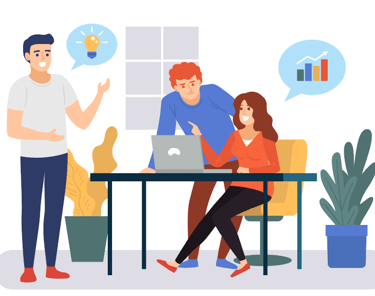
Create Schoology practice communities for teachers to share reflections, resources, and implementation evidence.
Include collaborative activities in every session (co-designing lessons, case analysis, and peer simulations).
Implement peer feedback groups to observe, discuss, and improve hybrid strategies.
Encourage shared projects (e.g., hybrid literacy stations or “Tech with Purpose” mini campaigns) showcased in a digital gallery.
Host short synchronous meetings in Teams for ongoing discussion, support, and professional networking.


Leaders and Contributors Shaping This Professional Learning
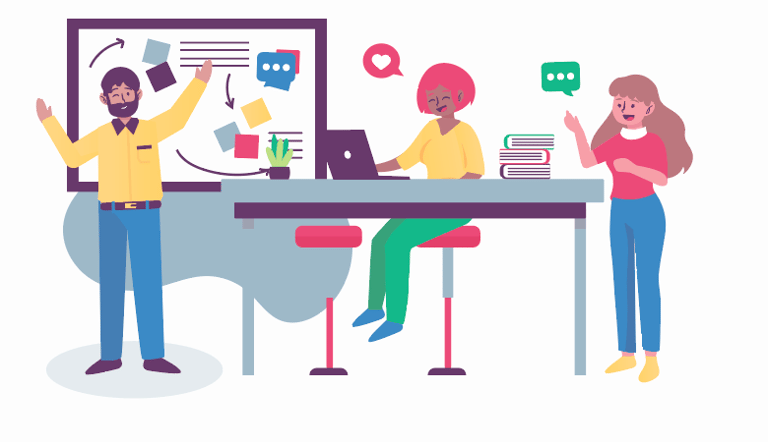

Lead Facilitator (Paula A. Correa):
Leads synchronous sessions and guides teachers in designing hybrid learning experiences.
Models effective strategies and provides personalized pedagogical feedback.
Oversees collaboration spaces in Schoology and Teams.
Participating Teachers:
Co-design hybrid reading and writing activities and share classroom implementations.
Contribute reflections and feedback within professional learning communities.
Serve as peer mentors, providing constructive insights to colleagues.
Technical or Digital Support (Distrit technology support):
Provides assistance with digital tools (Genially, Canva, PebbleGo, HMH Into Reading).
Ensures accessibility and smooth operation of all platforms.
Audience and Their Needs

Primary Audience:
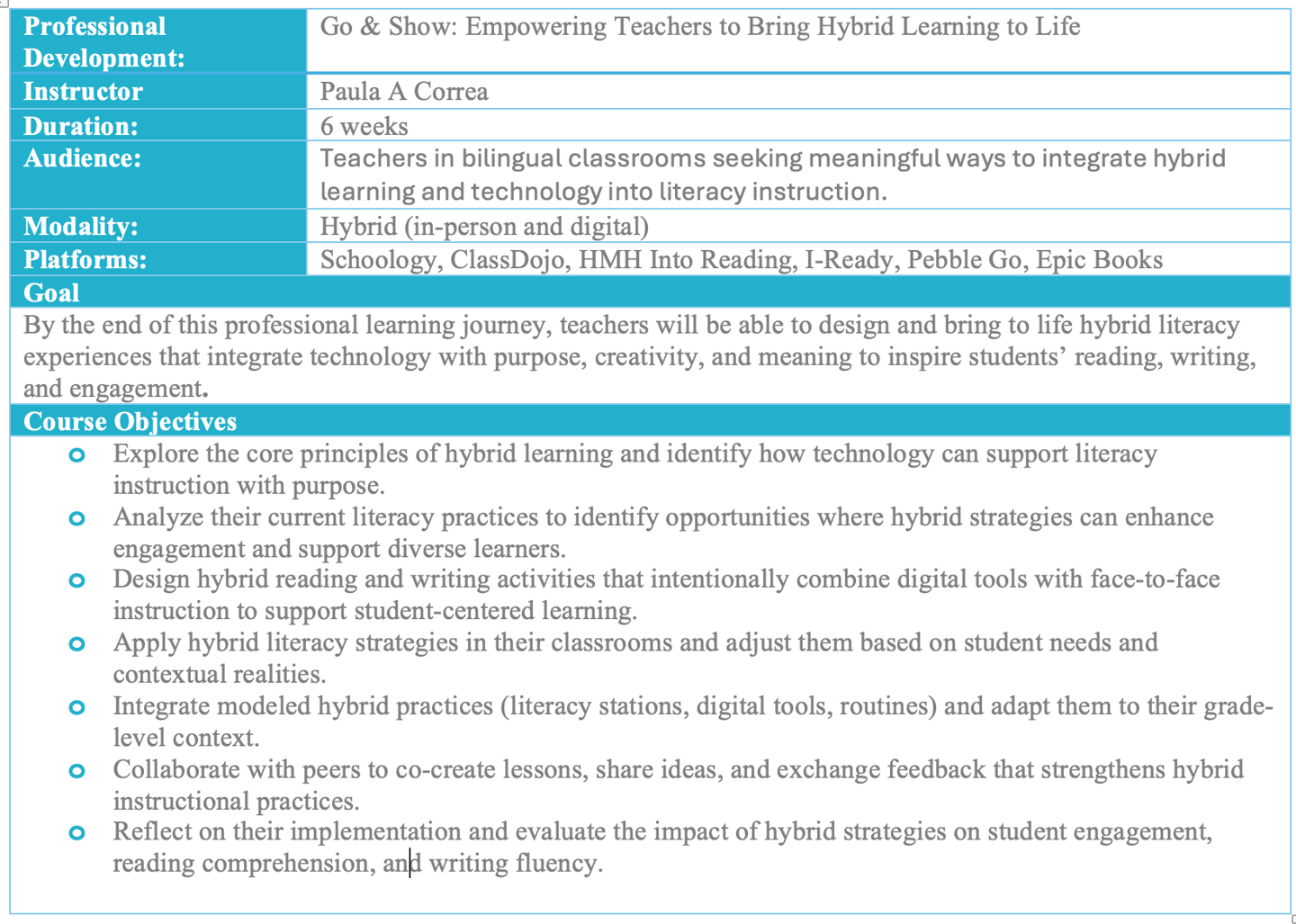
Elementary teachers, particularly second-grade educators working in bilingual or ESL classrooms.
Participants in the Explorers of the Magical Forest of Reading and Writing program.
Identified Needs:
Learn to integrate technology purposefully into reading and writing instruction.
Design inclusive and realistic hybrid experiences that fit their school’s resources.
Build digital confidence and teaching competence through modeling and guided practice.
Access ongoing support and professional collaboration to share challenges and successes.
Reconnect with their teaching purpose and the human meaning behind educational innovation.
Instructional Design of the PL and Justification
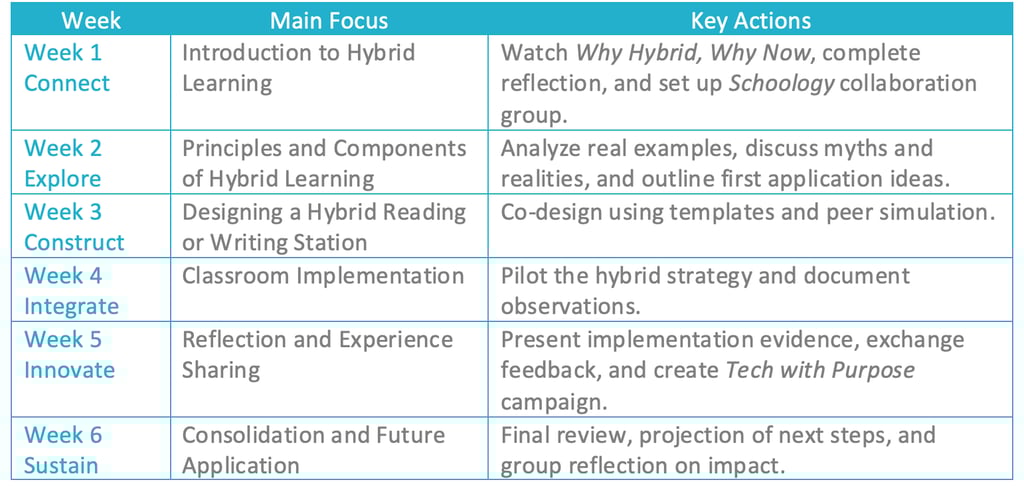
For the instructional design of this professional learning experience, I will use the BHAG & 3 Column Table, the UbD (Understanding by Design) model, and the CECII methodological proposal, which I have been developing through my teaching experience and the new knowledge gained throughout the master’s program. The BHAG & 3 Column Table make it possible to establish a transformative goal and translate it into clear objectives, activities, and evidence, ensuring coherence and a strong focus on authentic classroom transfer. UbD, through backward design (Wiggins & McTighe, 2005), ensures that all learning experiences begin with clarity about the desired results and progress intentionally toward meaningful application. Meanwhile, CECII (Connect, Explore, Construct, Integrate, Innovate) contributes a dynamic, experiential methodology grounded in my professional and academic reflections, guiding learning through active cycles of exploration, construction, implementation, and analysis. Integrating these three models allows the PL to remain rigorous, coherent, and deeply connected to authentic teaching practice.
Justification:
This structure promotes active, experiential learning centered on teaching practice.
Enables authentic classroom transfer, fostering autonomy and collaboration among peers.
The combination of BHAG, CECII, and UbD ensures alignment between goals, activities, and evidence, supporting sustainable pedagogical change
Schedule / Timeline

Resources
Digital Resources:
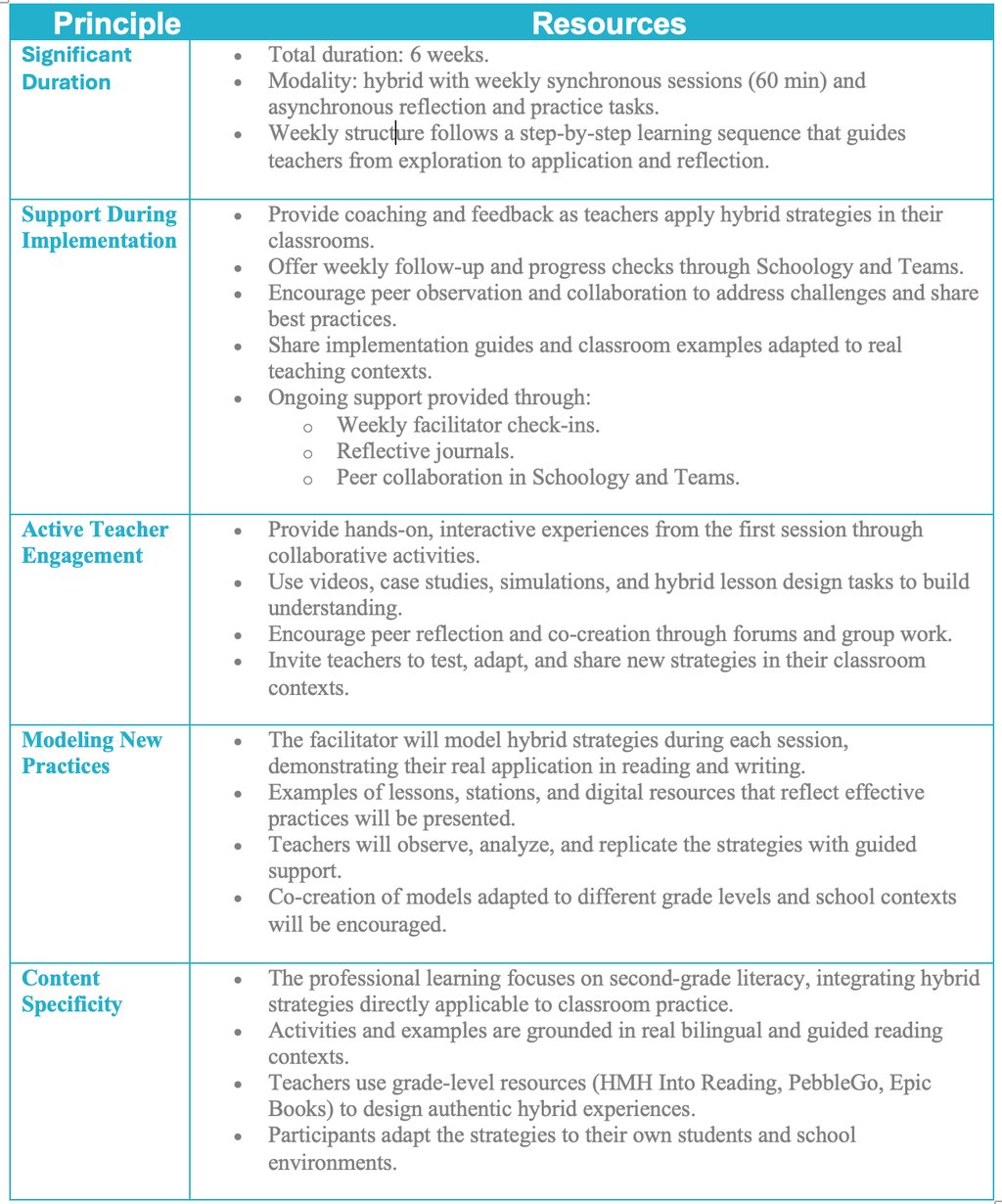
Schoology: Main platform for hosting materials, discussions, and submissions.
Microsoft Teams: Weekly live sessions, coaching check-ins, and collaboration.
Canva / Genially: Creation tools for visuals, hybrid station templates, and teacher products
HMH Into Reading: Literacy resource for creating hybrid reading lessons.
PebbleGo & Epic Books: Digital libraries to support reading stations.
I-Ready: Optional tool for monitoring literacy progress.
Pedagogical Resources:
Hybrid lesson planning templates (CECII + 3 Column Table).
Implementation guides for hybrid literacy activities.
Sample hybrid stations (reading, writing, interdisciplinary).
Case studies and short videos to analyze examples of hybrid learning.
Rubrics and checklists for evaluating hybrid lessons and peer feedback.
Reflection journals for weekly metacognition and application.
Human Resources:
Lead Facilitator (Paula A. Correa)
Participating Teachers
Optional Digital Support: assists with platform setup (Schoology, Teams). Supports tool use (Genially, Canva, PebbleGo, HMH).
Learning Environment Resources:
Classroom with basic devices (laptops, tablets, or shared stations).
Internet access (even limited or shared).
Projector or teacher computer for modeling lessons.
Optional materials: printed QR codes, reading journals, and anchor charts.


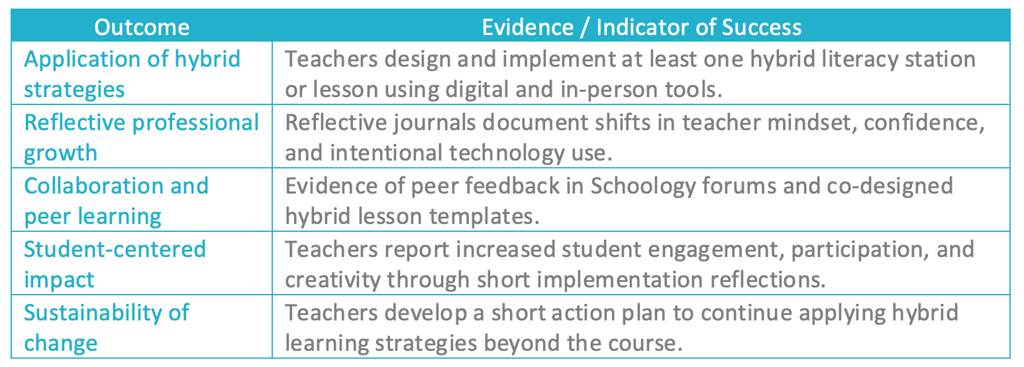
Expected Outcomes / Indicators of Success
By the end of this professional learning experience, teachers will demonstrate observable transfer of learning through the following outcomes:

REFERENCES
Fink, L. D. (2003). Creating significant learning experiences: An integrated approach to designing college courses. Jossey-Bass.
Gulamhussein, A. (2013). Teaching the teachers: Effective professional development in an era of high-stakes accountability. Center for Public Education.
https://www.nsba.org/-/media/NSBA/File/cpe-teaching-the-teachers.pdf
Harapnuik, D. (2021). CSLE + COVA: Creating Significant Learning Environments and Choice, Ownership, Voice and Authentic Learning.
https://www.harapnuik.org/?page_id=7444
ISTE. (2017). ISTE Standards for Educators. International Society for Technology in Education.
https://www.iste.org/standards/for-educator
Wiggins, G., & McTighe, J. (2005). Understanding by design (Expanded 2nd ed.). ASCD.